How to Activate Amenities Residents Actually Use: A Framework for Operators

Most residential operators know this feeling.
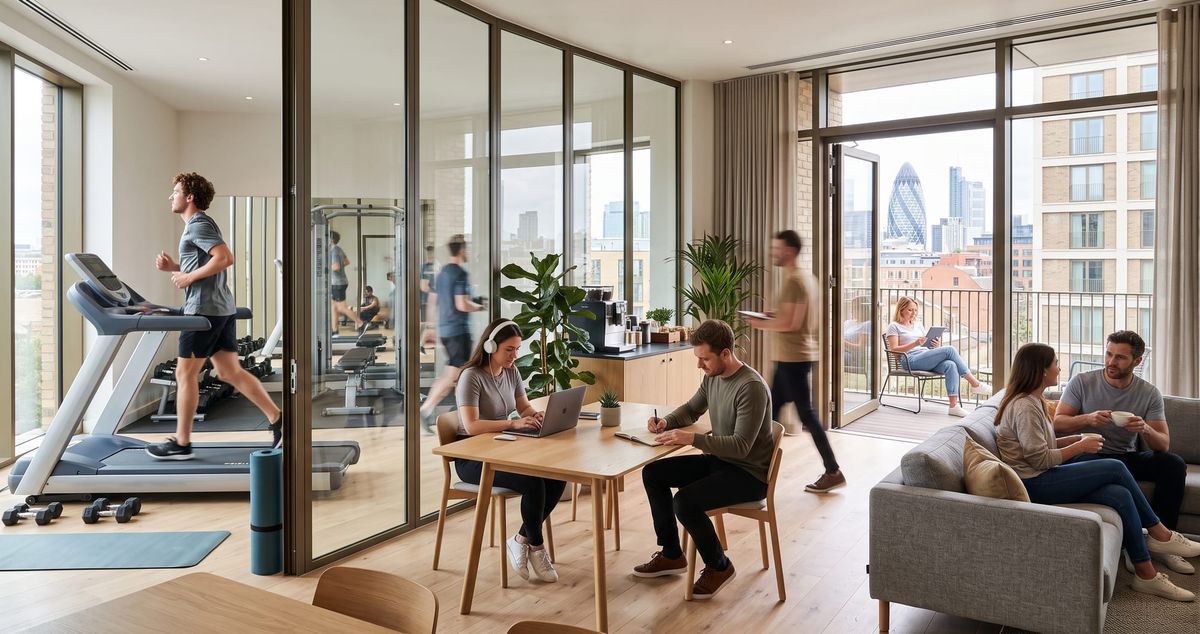
You've invested in the amenities. The gym is properly equipped. The co-working space is well-designed. At viewings, residents cite it as one of the reasons they chose the building. Six months later: fifteen people use the gym. The co-working space gets booked a few times a week. The rooftop comes to life in July and goes quiet by September. The investment is there. The residents are there. Something between the two isn't connecting.
This gap — between what operators spend on amenities and how much value residents get from them — is one of the most persistent problems in BTR. And it almost always has a fixable cause. The first step is understanding why activation fails, because the cause shapes everything else.
Most of the time it's one of four things. Awareness that doesn't stick, residents heard about the amenities at move-in, when they were overwhelmed with information and not in a position to retain it. A welcome pack that gets skimmed doesn't create habits. Then there's friction in the access path: a small amount of friction is enough to stop most people from engaging with a service they don't urgently need. The path from "I want to use this" to "I'm using it" has to be short. If it isn't, it doesn't matter how good the amenity is.
The third cause is a mismatch with how residents actually live. A cinema room in a building of professionals who travel Monday to Friday won't perform unless it's promoted at the right moments. The fourth — the one that keeps the gap from closing — is having no mechanism for improvement.
The following steps are for CX Managers and Heads of Operations, whether you're assessing an existing building or getting a new amenity programme right from the start.
Start with a baseline. For each amenity: current usage rate, who uses it and when, what the access process looks like step by step. In most buildings, the answer to at least one of those questions is "we don't know." That's itself diagnostic. If you can't measure it, you can't manage it.
Walk the path your residents walk. Go through the access process as a resident would. Count the steps. Identify every point of friction. Every unnecessary step is a hypothesis for improvement.
Get the communication timing right. Most amenity communication fails not because the content is wrong but because the timing is. Behaviour-triggered communication consistently outperforms batch sends. The message that arrives at the right moment gets acted on.
Configure your offer around actual residents. The amenity programme reflects assumptions from the design stage — those assumptions age. Operators who perform best can adjust the service offer based on real usage data, without launching a capital project every time something isn't working.
Review on a real cadence. Usage rates, booking patterns, uptake — visible regularly, not just when satisfaction surveys come in. The buildings that close the activation gap do it through continuous small adjustments, not single initiatives.
The highest-rated BTR communities by facilities in the HomeViews dataset aren't the ones with the most amenities. Cardiff's Verse, The Keel in Liverpool, Hairpin House in Birmingham — residents praise the management of facilities as much as, if not more than, the facilities themselves (HomeViews, 2024).
The activation gap isn't closed by adding more. It's closed by understanding what residents want, removing the friction that stops them using it, and building the infrastructure to maintain that over time.