Why the best corporate workplaces are becoming service platforms
The workplace is no longer competing on design. The best office buildings function like service platforms — and the gap between those that do and those that don't is widening.

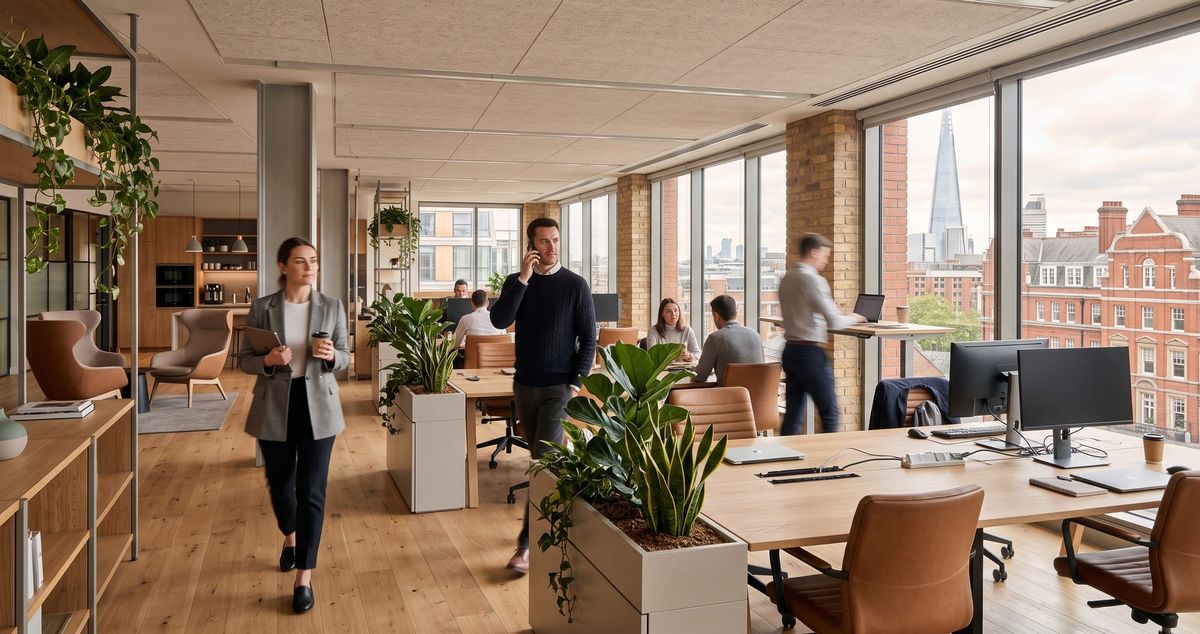
UK office attendance reached 44.2% in February 2026, the highest level since before the pandemic. More people are coming back to the office, more often. 65% of organisations now require employees to be in the workplace a minimum number of days per week (CIPD, 2025), and 97% of SMB leaders plan to increase in-office attendance over the next 12 months (Work.Life, 2026).
The mandate is there. The question is whether the office is worth coming to.
That question matters more than it might seem. JLL's 2025 Workforce Preference Barometer found that more than 80% of employees who are happy with their workplace also have positive feelings about stricter attendance policies. The correlation runs the other way too: employees who don't feel their workplace is working for them are the ones most resistant to coming back. The office has to earn the commute.
For most of the pre-pandemic era, the corporate workplace competed on design, location and amenities. A well-fitted-out office in a good building was enough to attract and retain talent. That era is effectively over.
Employees now have a reference point they didn't have before: their home, which is flexible, quiet and free of friction. The office has to offer something meaningfully better, and "better" in this context doesn't mean more impressive. It means more useful.
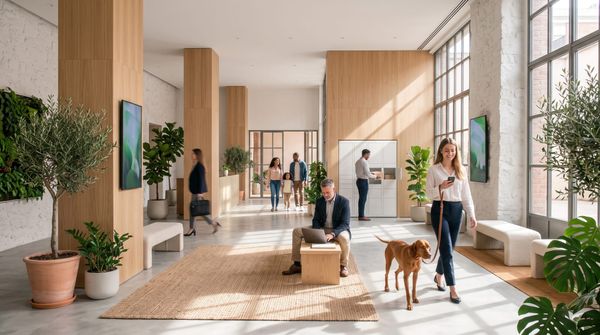
The best-performing corporate workplaces in the UK are converging on a model that looks less like a traditional office and more like a service platform. The physical space is the baseline. What's layered on top — the services available to employees, how reliably they're delivered, and how little friction stands between an employee and what they need — is what determines whether the office is genuinely competitive.
The shift has practical implications for how buildings are managed.
A workplace that functions as a service platform isn't one with more amenities on the list. It's one where the operational layer connecting employees to those amenities is built to work consistently without adding complexity to the facilities team. Parcel management that runs automatically. Booking systems that don't require a call to reception. Services that are available when employees are actually in the building, not just during core hours.
For HR teams and heads of people, this matters because the workplace experience is now a retention and recruitment lever in a way it wasn't before. Employees who feel their office is well run, responsive and genuinely useful to their day are more likely to come in willingly, more likely to be productive when they do, and more likely to stay.
For facility managers and building operators, it matters because the demand on the workplace has increased without a proportional increase in team capacity. The buildings that are managing this well have done so by reducing manual workload through automation and integration, not by adding headcount.
Smart Point brings that operational layer to corporate workplaces in the UK. Our amenity platform connects employees to building services through a single interface, removing the friction that sits between a person and what they need. Our smart lockers handle parcel management automatically, eliminating one of the most persistent drains on reception time. And our operations dashboard gives building managers real-time visibility across every service, without requiring manual data pulls or cross-system reconciliation.
For companies managing multiple office locations, the consistency across sites matters as much as the experience in any individual building. The same interface, the same data structure, the same service reliability — whether employees are in the London office or the Manchester one.
The office is competing for attendance in a way it never had to before. The buildings that win that competition aren't the ones with the longest list of amenities. They're the ones where coming in feels easier and more useful than staying home.