How smart building technology is separating performers from laggards in UK BTR
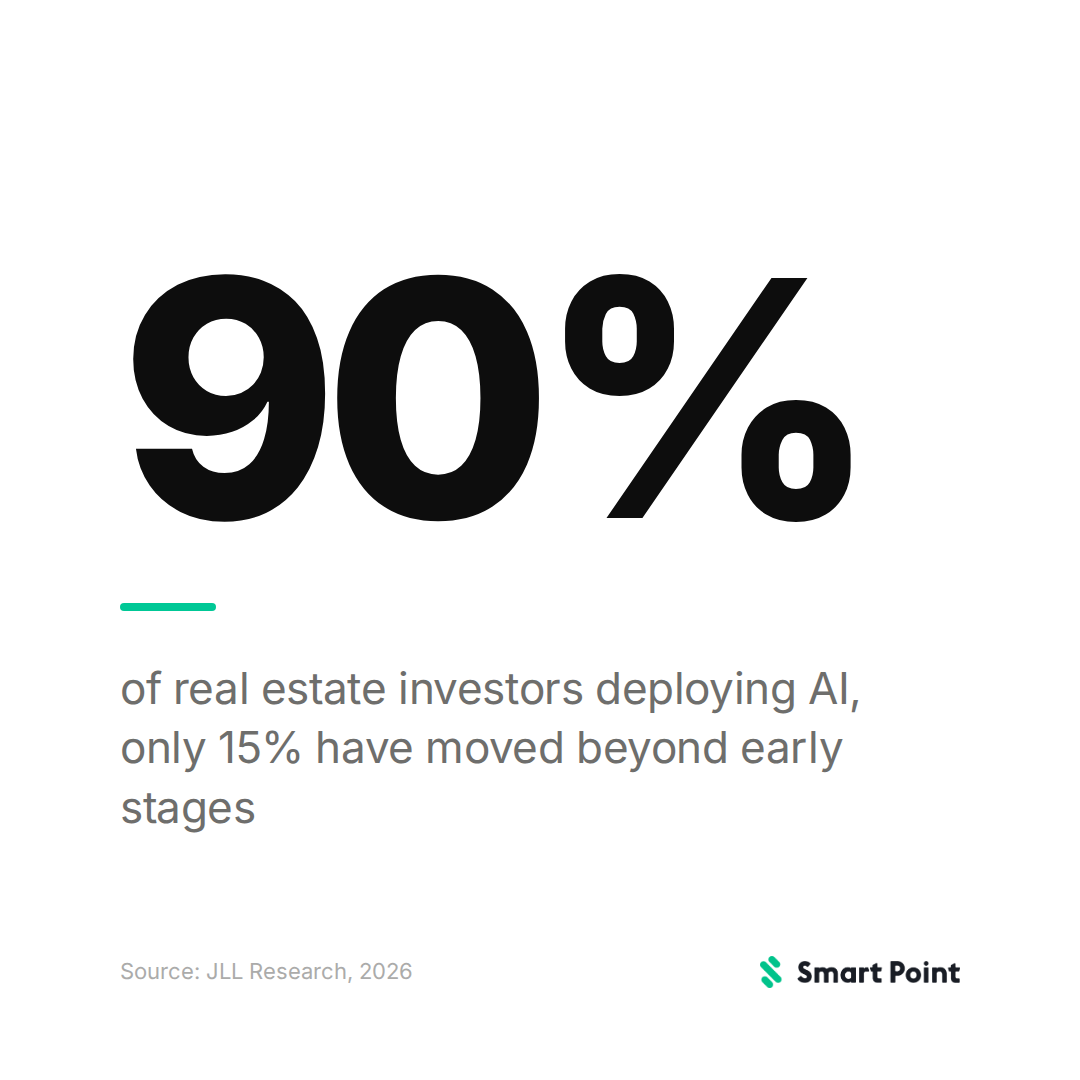
90% of real estate investors are deploying technology. Only 15% are benefiting from it. Here's what separates the buildings that are actually moving the needle from those that aren't.


90% of real estate investors are deploying technology. Only 15% have moved beyond early stages to see meaningful impact (JLL Research, 2026). That gap — between deployment and benefit — is the defining operational challenge of UK BTR right now.
It's not a technology problem. Most of the tools that could meaningfully improve how a BTR building performs are available, tested, and in use somewhere. The buildings that are pulling ahead aren't doing it because they found a better piece of software. They're doing it because they built the operational layer that makes software work.
That distinction matters more than it might seem. Technology deployed on top of a fragmented operation doesn't fix the fragmentation. It adds another system to manage, another data source to reconcile, another interface for the on-site team to navigate. The buildings that are genuinely benefiting from their technology investment have done something different: they've simplified first, and then added.
The pattern shows up clearly in the HomeViews data. The HomeViews & Rightmove BTR Report 2025 identifies management — not technology, not specification — as the primary differentiator between buildings that residents rate highly and those they don't. Technology is the enabler. Management is the outcome. The buildings confusing the two are the ones stuck in early stages.
What does ""moving beyond early stages"" actually look like in practice?
It looks like an operator who knows their amenity usage rates without running a manual report. Who can identify which residents haven't engaged with any building service in the past 60 days and act on that information before renewal season. Who can benchmark satisfaction across 10 buildings on the same data model, and explain to an institutional investor why that matters for asset valuation.
None of those capabilities require cutting-edge AI. They require operational infrastructure that connects data across the building — usage, satisfaction, maintenance, engagement — into a single, coherent picture that the team can act on.
The BTR buildings that are separating from the pack in 2026 aren't the ones with the most technology. They're the ones that have made their technology work together. One operating layer, one view, one set of data that informs decisions rather than requiring someone to generate a weekly report manually.
Smart Point is that operating layer for BTR operators across the UK. Our amenity platform connects residents to services through a single interface. Our operations and analytics dashboard gives operators real-time visibility across every building service without manual data pulls. And our integrations connect Smart Point to the broader building management stack, so the data that matters is always in one place.
90% are deploying. 15% are benefiting. The difference is the operating layer underneath.
See how Smart Point works in practice →